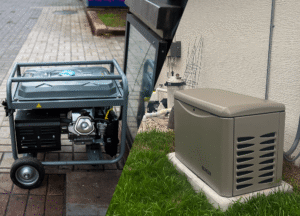
When the power goes out, many homeowners immediately think of a portable generator as a quick fix. While portable generators can provide temporary power during an outage, they often come with limitations, safety concerns, and operational challenges that families do not consider until they are facing a real emergency.
Severe storms, hurricanes, winter weather, and unexpected power outages continue to impact homes across North and South Carolina. This is why more homeowners are exploring whole-home standby generators as a safer, more reliable backup power solution.
Never Dark recently joined the Check A Pro Radio Show to discuss the key differences between portable and standby generators, the importance of professional installation, and why more Carolinas homeowners are making the switch to whole-home backup power. Listen to the full podcast here: Never Dark on the Check A Pro Radio Show
Why Power Outages Are a Growing Concern for Carolinas Homeowners
Homeowners throughout the Carolinas face a variety of weather-related threats that can cause power outages ranging from minor disruptions to extended blackouts lasting several days. Short outages interrupt daily routines, while longer outages create serious challenges for families, particularly those with medical needs, young children, or elderly household members.
The Limitations of Portable Generators
Portable generators are often seen as an affordable backup power option, but they require considerable effort at exactly the moment you need power most. During an outage, portable generator owners typically must:
– Store and manage fuel ahead of time
– Move the generator into position outdoors
– Start the unit manually
– Run extension cords throughout the home
– Monitor fuel levels throughout the outage
– Manually shut the generator down when power returns
In addition, portable generators can typically power only a limited number of appliances or circuits at one time, leaving the rest of the home without electricity.
How a Whole-Home Standby Generator Works
How a Whole-Home Standby Generator Works
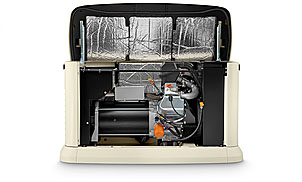
A whole-home standby generator offers a completely different experience compared to a portable generator unit. These permanently installed systems are connected directly to your home’s electrical panel and fuel supply, either natural gas or propane.
When utility power fails, an automatic transfer switch detects the outage and signals the generator to start. Within seconds, power is restored throughout the home with no action required from the homeowner. When utility service returns, the system automatically transfers power back to the grid and shuts the generator down.
Whether you are at home, asleep, at work, or traveling, the entire process happens automatically.
How an Automatic Transfer Switch Works
The automatic transfer switch is one of the most important components of a whole-home standby generator system. It safely disconnects the home from utility power before connecting it to the generator’s power supply. Once utility service is restored, the transfer switch manages the seamless transition back to the electrical grid.
Without a properly installed transfer switch, generator operation can become unsafe and unreliable. This is one of the key reasons why professional installation is critical when investing in a backup power system.
Portable Generator vs. Standby Generator: Which Is Right for You?
For some homeowners, the limitations of a portable generator may be acceptable for occasional, short-term outages. For others, particularly during extended outages or severe weather events, the inconvenience and safety risks quickly become unworkable.
Whole-home standby generators are the preferred solution for Carolina’s homeowners who want automatic, whole-home protection without the manual effort and limitations of a portable unit.
Why Professional Generator Installation Matters
A standby generator is only as reliable as its installation. A professional site evaluation is an essential first step that helps determine:
– The correct generator size for your home’s power needs
– The best fuel source option, whether natural gas or propane
– Your home’s electrical requirements and transfer switch configuration
– Optimal placement for safety, airflow, and accessibility
– Local code compliance and permitting requirements for your area
– Working with experienced, trained professionals ensures your system is installed safely and performs dependably for years to come.
Schedule Your Generator Evaluation Before the Next Carolinas Storm
The best time to evaluate your backup power options is before the next storm arrives. Rather than scrambling during an outage, homeowners with whole-home standby generators have the confidence of knowing their families, homes, and essential systems are protected no matter what.
If you are considering a standby generator for your Carolinas home, a professional site evaluation can help you understand your options and find the right backup power solution for your home’s unique needs.
Reliable backup power is about safety, being prepared, and protecting what matters most.
To find out more, check out Neverdark’s episode on Check A Pro Radio Show here: https://www.neverdarkgeneratorradio.com/